Setting up a Dutch holding company pays off mainly when your operating company makes more profit than you need privately, when you want to keep built-up capital away from business risk, or when you may sell the business one day. Profits then move from your operating company to your holding without corporate tax and without dividend withholding tax. If you take everything out privately each year, a holding gives you no tax benefit and mostly adds cost.
How a holding and operating company work together
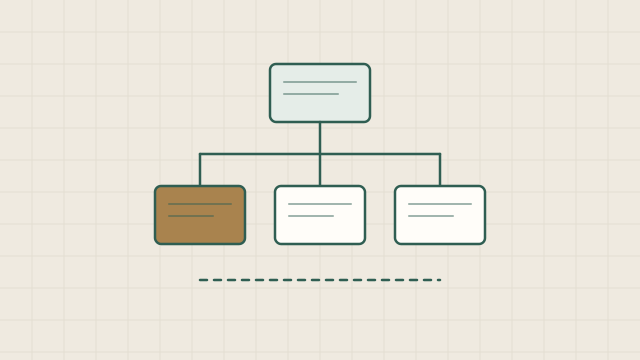
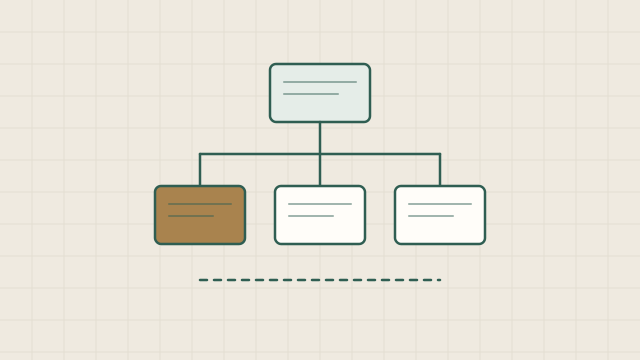
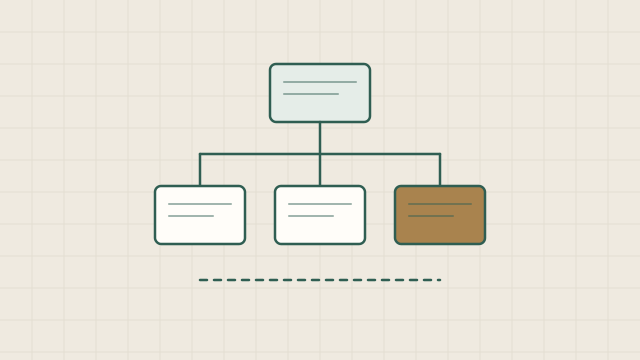
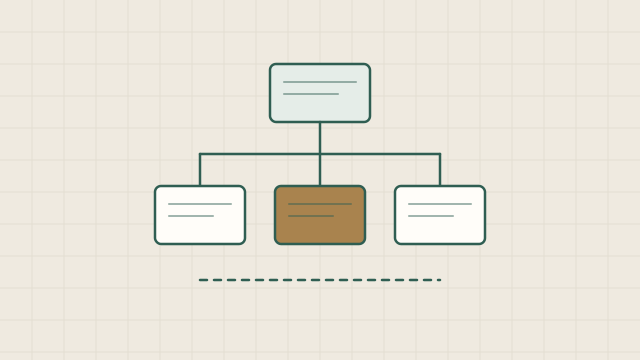
You have two Dutch private limited companies, each a BV (besloten vennootschap). The operating company does the business: it signs the contracts, has the clients and staff, and carries the risk. The holding owns the shares of the operating company, and you own the shares of the holding. When an entrepreneur sets one up for themselves, the Dutch call it a persoonlijke holding, a personal holding.
The structure rests on the participation exemption (deelnemingsvrijstelling). If your holding owns at least 5% of the shares in the operating company, dividends and capital gains on those shares are exempt from corporate tax at holding level. The operating company also does not have to withhold the 15% Dutch dividend tax on such a dividend. The profit has already been taxed in the operating company, at 19% on the first € 200,000 and 25.8% above that, and can then move up a level without any further tax.
When setting up a Dutch holding is worth it
There are three situations in which we almost always find a holding worthwhile.
- You consistently make more profit than you spend privately. The part you do not need stays in the holding, where you can invest it or put it back into the business, without first paying box 2. Box 2 is the Dutch income tax on income from a substantial shareholding of 5% or more.
- You want to separate your accumulated capital from business risk. If things go wrong in the operating company, its creditors in principle cannot reach money that already sits in the holding.
- You may sell the business one day. If the holding sells the shares of the operating company, the gain falls under the participation exemption. If you sell the shares privately, you pay box 2 straight away.
A holding also makes later steps easier, such as a second operating company for a new activity, a foreign company such as a US LLC beneath the holding, or gradually handing the business over to your children.
A worked example for 2026
Say your operating company makes € 100,000 profit in 2026 after paying you the customary director's salary. The company pays 19% corporate tax on that, which is € 19,000, leaving € 81,000.
If you pay that € 81,000 to yourself as a dividend, it is taxed in box 2: 24.5% on the first € 68,843 and 31% on the rest. That comes to € 20,635, so you keep € 60,365. If the operating company pays the same amount to your holding instead, the full € 81,000 arrives. You have € 20,635 more to invest for as long as the money stays in the holding.
On a sale the gap gets wider. Say a buyer later pays € 1,500,000 for the shares in your operating company and your acquisition cost is € 20,000. Sell privately and you pay € 454,325 in box 2 on the gain of € 1,480,000. If your holding sells, the gain is exempt and the full amount sits in the holding.
These figures assume no tax partner, no other box 2 income and no running costs for the second company. Bear in mind that the benefit is a deferral. When you later take the money out of the holding, you still pay box 2. You decide when, though, and by spreading distributions over several years you stay in the 24.5% band more often. Our article on box 2 in 2026 explains how.
A holding put in place just before a sale often does not deliver what you hope. When you move existing shares into a new holding, the box 2 charge only rolls over if there are genuine business reasons for the new structure. A holding that exists only to make a sale tax-free does not qualify, so put it in place well ahead of time.
How you set one up
If you are starting out, the order is simple: first the holding, and then the holding incorporates the operating company. Both companies are incorporated by a Dutch civil-law notary, who also registers them with the KVK, the Dutch Chamber of Commerce. There is no statutory minimum share capital.
If you already have a BV, you contribute its shares to a new holding. This is usually done through a share merger (aandelenfusie): you receive shares in the holding in exchange for your shares in the operating company. Under certain conditions you do not settle any box 2 tax, and the tax claim rolls over to your holding shares. If you want certainty beforehand, you can ask the Dutch tax authorities for a ruling.
If you trade as a sole proprietor, you can convert the business without paying tax on hidden reserves and goodwill through a tax-free incorporation (geruisloze inbreng). Since the new policy decree of November 2025, this can under conditions also be done straight into a holding structure, with the holding passing the business directly on to an operating company.
What a holding costs and asks of you
The KVK puts notary fees for incorporating a BV at a minimum of € 500 to € 1,500, plus a one-off registration fee of € 85.15. With a holding and an operating company you pay that twice. If you place an existing company under a holding, a notarial deed to transfer the shares is added.
The running costs weigh more. You have two sets of books, two annual accounts to file with the KVK and two corporate tax returns. You can combine the returns in a fiscal unity if the holding owns at least 95% of the operating company. Ask your accountant beforehand what the second company costs each year and set that against the benefit in the example.
As a director with a substantial shareholding (a DGA in Dutch terms) you also pay yourself a customary salary, at least € 58,000 in 2026 unless you can show that a lower salary fits. That salary goes with the work you do, not with each company. Many owners are employed by the holding, which charges a management fee to the operating company.
Finally, the board remains responsible for every distribution. The operating company may only pay a dividend to the holding if it can keep paying its debts as they fall due afterwards. You test that as director, and you can be held liable for it.
When a holding is not worth it
With profit below roughly € 60,000 a year, little is left after your customary salary to collect in a holding, and the extra costs eat up the benefit. The same applies if you take out everything privately every year. You pay box 2 anyway, and going through a holding only adds cost. If you have no plans to sell, run little risk and are not building up capital in the company, one BV is usually enough, and we will tell you so.
Frequently asked questions
What does it cost to set up a Dutch holding?
The KVK puts notary fees for a BV at a minimum of € 500 to € 1,500, plus a registration fee of € 85.15. For a holding with an operating company you pay this twice, and after that you have the yearly cost of a second set of books and annual accounts.
Do I have to pay myself a salary in both companies?
No. The customary salary goes with your work, not with each company separately. You are often employed by the holding, which charges a management fee to the operating company.
Can I put my existing BV under a holding without paying tax?
Usually yes, through a share merger. You do not settle box 2 tax, provided there are business reasons for the new structure. A holding that only serves to make a sale tax-free does not meet that test.
From what level of profit does a holding make sense?
There is no fixed threshold. Below roughly € 60,000 profit a year it rarely pays; above that it depends on how much you can leave in the company and whether you may sell one day.
If you are unsure whether a holding pays off for you, book a free advisory call. We work through your own figures: how much profit you can leave in, what the second company costs each year, and in what order to set it up if you already have a BV or a sole proprietorship.
Sources
- Belastingdienst: Tarieven vennootschapsbelasting
- Belastingdienst: Deelnemingsvrijstelling
- Belastingdienst: Ontvanger dividend in nederland vrijstelling dividendbelasting
- Belastingdienst: Fiscale eenheid vennootschapsbelasting
- Belastingdienst
- KVK: Belastingtarieven 2026
- KVK: De besloten vennootschap bv
- KVK: Inschrijfvergoeding
- Officiële bekendmakingen: Staatscourant 2025, 37092
- Belastingdienst: Loon en aanmerkelijk belang
- Belastingdienst: Handboek loonheffingen
Last checked on 6 Nov 2026.