Under the Dutch customary salary rule (gebruikelijkloonregeling), a director who holds a substantial shareholding in their own company must take a salary of at least € 58,000 in 2026, up from € 56,000 in 2025. If your best-paid employee earns more, or the most comparable employed job pays more, that higher figure applies. A lower salary is only allowed if you can show that comparable work pays less, or in special situations such as the start-up phase or a serious loss-making year.
How the 2026 director salary rule works
The rule applies to anyone who works for a BV, a Dutch private limited company, in which they hold at least 5% of the shares, alone or together with their tax partner. That stake is called a substantial shareholding (aanmerkelijk belang), and the owner-director is known as a DGA (directeur-grootaandeelhouder). If your partner works in the company, the rule applies to your partner too, and to children who work in it and own shares themselves.
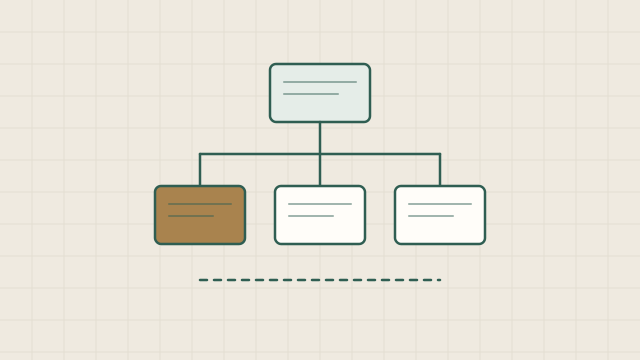
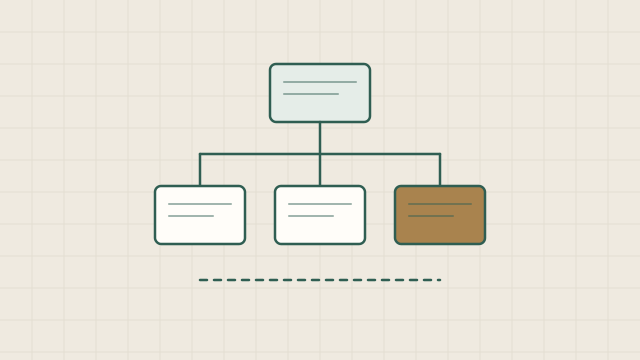
Your salary must be at least the highest of three amounts:
- 100% of the salary for the most comparable employment;
- the salary of the highest-paid employee of your company or of an affiliated company;
- the standard amount of € 58,000.
Up to and including 2022 you could work with 75% of the comparable salary. That margin disappeared in 2023. An affiliated company includes a company in which your BV holds at least a third, or which holds at least a third of your BV. Your holding and your operating company are therefore affiliated.
If you pay yourself less than the customary salary, the company records the difference at the end of the year as notional salary in its payroll and pays wage tax on it, even though you never received that money.
Supporting a lower salary
You can go below € 58,000 if you can make it plausible that the salary for the most comparable employment is lower. The comparison does not have to be with exactly the same work. The Dutch tax authorities give the example of an orthodontist comparing themselves with an employed dentist. Good support consists of collective labour agreement pay scales, salary surveys and vacancies for roles with the same responsibility and scope.
Working part-time for your company does not lower the salary automatically. You still need to support what a comparable full-time role pays. If you work three days a week and a comparable full-time employee earns € 55,000, you arrive at € 33,000.
Once you have made a lower salary plausible and the tax authorities think a higher one fits better, the burden of proof is on them. If you want certainty beforehand, you can ask for a prior consultation. If your customary salary for all your work across all your companies is no more than € 5,000, you do not need to record any notional salary.
Start-ups and loss-making years
The old regime for innovative start-ups with an R&D declaration, which allowed the statutory minimum wage, no longer applies to new cases since 2023. Ordinary start-ups still have some room. If the company cannot pay the customary salary because of its start-up phase, for example due to heavy investment or low cash flow, you may temporarily pay less. The starting point is then the statutory minimum wage for the hours you work, for at most three years. If the business started as a sole proprietorship, that period counts towards the three years.
If you convert a sole proprietorship into a BV with retroactive effect, the customary salary rule only applies from the notarial incorporation. Our article on tax-free incorporation explains the process.
If your company makes losses so large that its continuity is at risk, a lower salary is also allowed. It is not allowed for an incidental loss, nor when the company can still pay its bills, nor when it cannot pay them because you took money out through a current account, dividends or other withdrawals.
Worked example: € 58,000 or € 45,000
Say your company makes € 120,000 profit in 2026 before your salary, and you can show that the most comparable role pays € 45,000.
If you leave everything above your salary in the company, a salary of € 58,000 means you pay € 29,490 now in income tax, health insurance contribution and corporate tax combined, with € 50,220 left in the company. With a salary of € 45,000 that becomes € 24,819, with € 60,750 left in the company. You pay € 4,671 less this year.
If you pay out the remaining profit as a dividend straight away, the difference is much smaller. With a € 58,000 salary you pay € 43,101 in total, with € 45,000 you pay € 41,841. That saves € 1,260, because the money you take less as salary is still taxed through corporate tax and box 2, the Dutch tax on income from a substantial shareholding.
These figures assume no tax partner, an age below Dutch state pension age and no other income. The general tax credit, the employed person's tax credit and the 4.85% income-related health insurance contribution are included, and as a DGA you are not insured under the employee insurance schemes.
A lower salary therefore mainly pays off if you leave profit in the company. If you need the money privately, the saving is small and often does not justify the risk of a correction. Keep in mind too that mortgage lenders look at your salary. Our article on box 2 in 2026 shows how salary and dividends work together.
Customary salary with a holding and an operating company
The customary salary goes with the work you do, and you do not pay it per company. In practice you are usually employed by your holding, which charges a management fee to the operating company. Watch the salaries of your staff, though. If someone in the operating company earns more than € 58,000, that salary is also your benchmark, because the holding and the operating company are affiliated. That only changes if you can show that your most comparable role pays less.
If you live abroad
If you move abroad and remain a director of your Dutch BV, the Dutch tax authorities say the company must in most situations still withhold Dutch wage tax on your director's pay, even if you do not do the work in the Netherlands. Whether the Netherlands may ultimately tax that salary, and so whether the customary salary rule affects you, depends on the tax treaty with your new country of residence. Dividends from your company also remain subject to the 15% Dutch dividend withholding tax, which a treaty may reduce, and often to box 2 as well. If you are moving to the United Arab Emirates, read our article on moving to Dubai with a Dutch BV first.
Frequently asked questions
What is the Dutch customary salary for a DGA in 2026?
At least € 58,000 a year, or more if your best-paid employee or the most comparable role earns more. In 2025 the standard amount was € 56,000.
Can I pay myself less than € 58,000 as a DGA?
Yes, if you can show that the salary for the most comparable employment is lower. In the start-up phase, or with losses that threaten the company's continuity, it can also be lower for a while.
What happens if I pay myself too little?
The company must record the difference at year end as notional salary and pay wage tax on it. You then pay tax on money you never received.
Do I also have to pay a customary salary in my holding?
You pay it once, for all your work within the group. Usually you are employed by the holding, which charges a management fee to the operating company.
In the free advisory call we look at which salary you can support and work out what a different salary nets you, with and without dividends. If you live abroad or plan to move, we include the treaty with your country of residence.
Sources
- Belastingdienst: Loon en aanmerkelijk belang
- Belastingdienst: Handboek loonheffingen
- Belastingdienst: Gebruikelijk loon gedurende voorperiode bv
- KVK: Belastingtarieven 2026
- Belastingdienst: Bijlage nieuwsbrief loonheffingen 2026
- Belastingdienst: Voorlopige aanslag tarieven en heffingskortingen
- Belastingdienst: Tarieven vennootschapsbelasting
- Belastingdienst
Last checked on 6 Nov 2026.