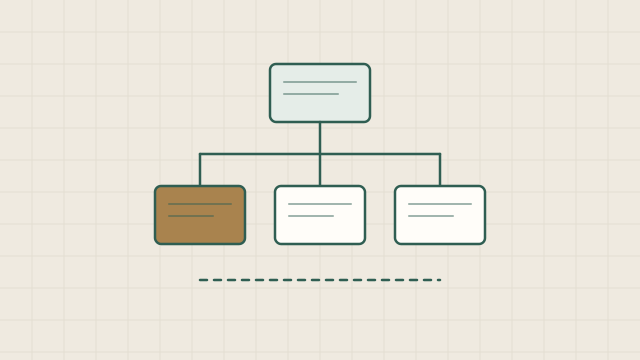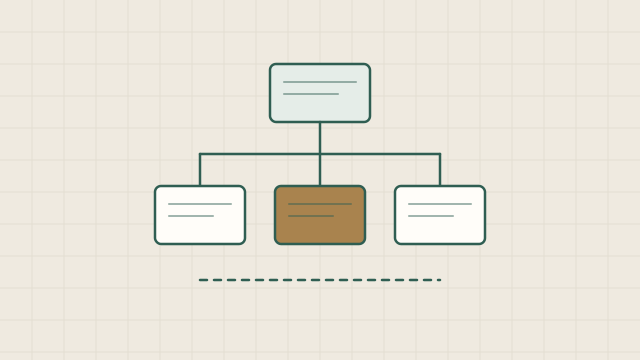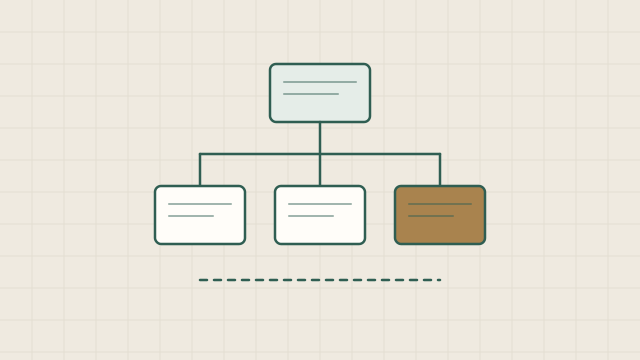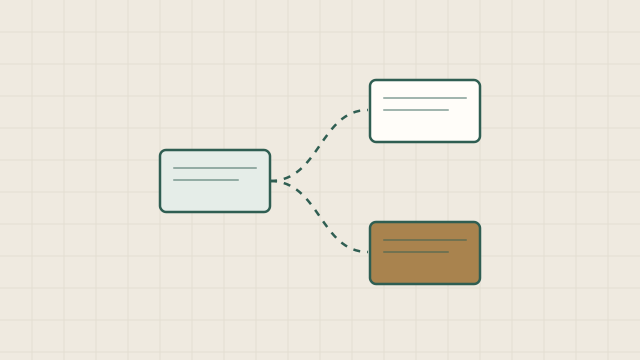
If you sell the shares in your Dutch BV personally, in 2026 you pay box 2 on the gain: 24.5% on the first € 68,843 and 31% on the rest. If you hold the company through a holding company, the gain is exempt in the holding under the participation exemption and you only pay box 2 when you take the money out personally. If the company sells its business as an asset deal, corporate tax comes first, and that easily costs a few hundred thousand euros more.
Selling your shares personally: box 2 on the gain
The gain is the sale price minus your acquisition price. For a BV you set up yourself, that is usually the capital you paid in at the start. For a company you bought, it is what you paid at the time. The gain is taxed in box 2, the Dutch tax on income from a substantial shareholding of 5% or more.
An example. You sell your company for € 2,000,000 and your acquisition price is € 20,000, so the gain is € 1,980,000. You pay 24.5% on € 68,843 and 31% on the rest, which comes to € 609,325. That is about 30.5% of the price, and you keep € 1,390,675. With a tax partner you can split the box 2 income and use the lower band twice, but at this amount that only saves € 4,475. The example leaves out selling costs and earlier losses.
Selling your company through a holding
If there is a holding company above your operating company, the holding sells the shares. With a stake of at least 5% the participation exemption applies and the gain is exempt from Dutch corporate tax. In the example, € 2,000,000 then sits in the holding, compared with the € 1,390,675 you kept when selling personally.
That difference of more than € 600,000 is deferred tax, because you pay box 2 as soon as you take a dividend from the holding. In the meantime the money can earn a return in the holding or go into a new venture, and you decide when to distribute. If you distribute up to the limit of the lower band each year, you pay 6.5 percentage points less on that part, about € 4,475 per person per year. Returns earned inside the holding are subject to corporate tax.
The holding has to be in place in time
Setting up a holding at the last minute usually does not work. You transfer your shares into a new holding without immediate tax through a share merger, but that relief does not apply if the merger is mainly aimed at avoiding or deferring tax. When a sale is already in the works, that is hard to rebut, and without the relief you pay box 2 on the transfer after all. If you are thinking of selling in a few years, set up the holding now, with a business reason that stands apart from the sale. How that works is covered in setting up a Dutch holding.
Asset deal: when the buyer only wants the business
Buyers often prefer to take over the business rather than the shares. They do not inherit old liabilities of the company and can amortise the goodwill. For you as the seller it is more expensive, because tax is levied twice: the company pays corporate tax on the gain, and you pay box 2 when you take the money out.
Say the company sells its business for € 2,000,000 and the tax book value is € 250,000. On the gain of € 1,750,000 the company pays 19% on € 200,000 and 25.8% on the rest, € 437,900 in total. That leaves € 1,562,100 in the company. If you liquidate it, you pay € 473,576 in box 2. You keep € 1,088,524 personally, € 302,151 less than with a share sale at the same price. Total tax comes to 45.6% of the price.
If the buyer insists on an asset deal, that difference belongs in the price. A holding only helps partly here: the corporate tax in the operating company remains, and only the box 2 moves to a later date.
Earn-outs and deferred payment
In many deals part of the price depends on results after the takeover. That is an earn-out, and it makes the tax outcome less predictable. If you sell personally, you have to decide in box 2 what the earn-out is worth and in which year to report it, and that regularly leads to discussion with the Dutch tax office. If your holding sells, the earn-out generally falls under the participation exemption. Interest on deferred payment, or on a loan you give the buyer, is not covered and is taxed in the normal way. Settle the tax treatment before you sign.
Should you emigrate before selling?
Leaving the Netherlands just before a sale rarely achieves anything. When you emigrate, the Netherlands issues a protective assessment, the conserverende aanslag, on the increase in value of your shares up to your departure. If you left after 15 September 2015, that assessment no longer lapses after ten years, and you have to pay it when you sell. Only the growth in value after you leave can fall outside Dutch tax, and even that depends on the tax treaty with your new country. With the United Arab Emirates this works out less favourably for Dutch nationals than many people expect, as explained in moving to Dubai with a BV. Emigration only helps if you leave years before a sale and the business still grows substantially afterwards. There is more on this in our article on the Dutch exit tax.
When a holding or another route pays off, and when it does not
A holding pays off if you do not need the proceeds personally straight away and want to reinvest. The larger the gain and the longer the money stays in the holding, the more the deferral is worth. If you need the money immediately, for a home or to pay off debts, you pay box 2 on the distribution anyway and the holding adds little. For a small sale the cost of an extra company, with the notary, a second set of books and its own annual accounts, often outweighs the benefit.
You rarely choose an asset deal yourself, but you can make sure the difference is reflected in the price. An earn-out can make a deal possible, provided you know in advance how it will be taxed. And if you want the business to stay in the family, look at the Dutch business succession relief first.
Frequently asked questions
How much tax do I pay when I sell my Dutch company?
If you sell the shares personally, in 2026 you pay box 2: 24.5% on the first € 68,843 of gain and 31% on the rest. Through a holding the gain is exempt and you only pay box 2 when you distribute.
Can I still set up a holding just before the sale?
Usually not without tax. A share merger that mainly serves to defer tax on a planned sale falls outside the relief, and you then pay tax on the transfer.
Why does a buyer want an asset deal?
The buyer avoids hidden liabilities in the company and can amortise the goodwill. For you it means corporate tax plus box 2, so the difference belongs in the price.
Is an earn-out taxed?
Yes. Personally the earn-out falls into box 2, and through a holding it generally falls under the participation exemption. It is best to agree the valuation and timing in advance.
In a free consultation we work through your sale: what you keep personally, what a holding can still do for you, what an asset deal costs and how an earn-out works out. That way you go into the negotiation with the numbers on the table.